
Sceye HAPS Specifications Include: Endurance, Payload And Battery Breakthroughs
1. Specifications tell you what the Platform Will Actually Do
There's a tendency within the HAPS industry to discuss goals rather than engineering. Press releases talk about coverage zones partnerships, coverage areas, and commercial timelines, but the harder and more informative discussion is about specifications — what the vehicle actually has to carry and how long it remains up, and the energy systems that make long-term operation feasible. To anyone who is trying to determine whether a stratospheric system is really mission-capable or merely being developed in a promising prototype, capacities for payloads, endurance estimates as well as battery performance are the places where the essence lives. Unsubstantial promises to "long endurance" and "significant payload" are simple. Delivering both at the same time in stratospheric height is the engineering challenge that separates genuine programs from ambitious announcements.
2. The Lighter-than-Air Architecture Modifies the Payload Equation
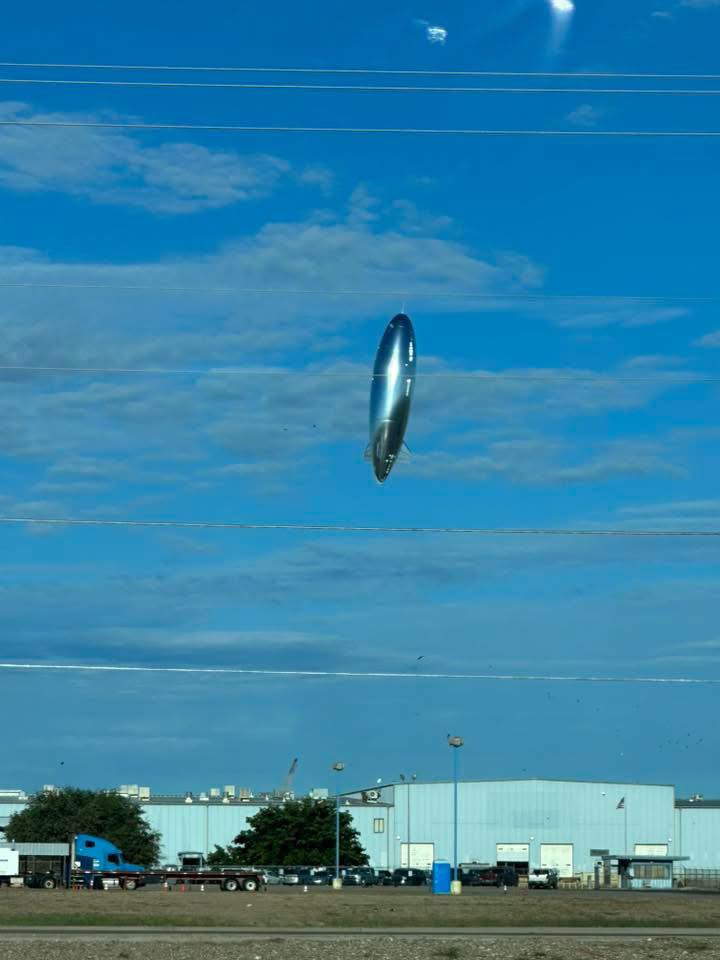
The fundamental reason Sceye's airship design can be able to carry significant payload is buoyancy carries out the most fundamental job of keeping the vehicle airborne. This is not an insignificant difference. Fixed-wing solar airplanes generate aerodynamic lift throughout the day this consumes energy, and also imposes structural restrictions that limit the additional mass the vehicle is able to transport. Airships that are floating in the stratosphere does not expend energy fighting gravity in the same way — that means that the energy generated by its solar array, as well as the structural capacity of the vehicle could be directed towards propulsion, station keeping, and paying load operation. This creates an increased payload capacity than fixed-wing HAPS designs in the same endurance genuinely struggle to match.
3. Payload Capacity Determines Mission Versatility
The importance of having a larger capacity payloads is apparent in the context of what stratospheric mission requirements actually are. The payload of telecommunications — antenna systems as well as signal processing hardware beamforming equipment has the real weight and volume. So does a greenhouse gas monitoring suite. It also includes a wildfire alarm in the form of an Earth observation package. Running any one of these missions effectively requires hardware that is mass. In order to run multiple missions simultaneously, you need more. Sceye's airship specifications were developed around the concept that a stratospheric platform should be able to carry a genuinely effective combination of payloads then forcing operators to decide between connectivity and observation because it isn't possible to carry both at the same time.
4. Endurance is where Stratospheric missions are either won or lost
A platform that can reach an altitude of more than the duration of 48 hours prior descend is useful for demonstrations. The ability to hold a position for months or weeks at an time is ideal for designing commercial services. The difference between those two options is essentially an energy-related issue, specifically, whether the vehicle is able to produce enough solar energy during daylight hours to run all its equipment and recharge its batteries to keep all functions throughout the night. Sceye endurance goals are based on this diurnal cycle challenge in which we consider the ability to sustain energy for the entire night in no way as a distant goal but as a fundamental necessity that all the other aspects of design must be built around.
5. Lithium-Sulfur batteries are a real Step toward a Significant Change
The battery chemistry behind conventional consumer electronics and electric vehicles, particularly lithium-ion has density characteristics that can cause limitations for stratospheric endurance applications. Every kilogram of mass that is carried in the air is a kilo of energy not available to payload. However, you'll require enough stored energy in order to keep the large device operating all night. The chemistry behind lithium-sulfur changes this considerably. With energy density of 425 Wh/kg. lithium-sulfur based batteries can store significantly more energy per pound than similar lithium-ion devices. When you're in a weight-constrained vehicle, where every Gram of battery mass will have potential costs in payload capacity, this increase in energy density can't be just a matter of time, it's significant.
6. Advances in Solar Cell Efficiency the Other Half of the Energy Story
The energy density of the battery determines the amount of power you are able to store. The efficiency of solar cells determines the speed at which you replenish it. Both matter, and progression in one without progress in the other can result in a deficient energy structure. New developments in high-efficiency solar cells — including multi-junction designs that can capture a wider range of solar energy than conventional silicon cells — can significantly increase the amount of energy harvested by solar-powered HAPS vehicles at all hours. In conjunction with lithium sulfur storage, these improvements are what makes a complete closed loop feasible, which means generating and storing sufficient energy each day that all systems can be operated with no external energy input.
7. Station-Keeping Draws Constantly From the Energy Budget
It's easy to see endurance purely in terms getting up, but in an stratospheric platform, staying on the ground is just a part of the equation for energy. station keeping — keeping the position in front of stratospheric winds by continuous propulsion consumes power continuously and makes up a substantial portion of energy consumption. The energy budget needs to support station keeping in conjunction with payload operations, avionics, thermal management, and communications systems all at once. This is why specifications that refer to endurance without providing what systems are operating within that time frame are difficult to judge. True endurance estimates assume full operational load and not a just a minimally configured vehicle, with payloads switched off.
8. The Diurnal Cycle Is the Constrained Design Parameter that Everything Else flows from
Stratospheric engineers are discussing the diurnal cycle — the rhythmic daily cycle of solar energy availability -as the principal constraint around which platform architecture is constructed. During daylight the solar array has to provide sufficient power to run all the systems and recharge the batteries with enough capacity. The batteries must sustain all systems till sunrise without becoming unstable, degrading payload performance, or entering any type of reduced-capability mode that would disrupt an ongoing monitoring or connectivity mission. In the design of a vehicle to thread this needle with a high degree of reliability all day long, throughout the duration of months is the major engineering issue of solar-powered HAPS development. Every decision in the specification such as solar array size as well as battery chemistry, propulsion efficiency, power draw of the payload -all are a result of this single governing constraint.
9. The New Mexico Development Environment Suits This Kind of Engineering
The development and testing of a stratospheric airship requires infrastructure, airspace and conditions in the atmosphere that aren't found everywhere. Skeye's home base is New Mexico provides high-altitude launch and recovery capability, clear weather conditions to test solar power, as well as access to the type of extended, uninterrupted airspace that continuous flight testing requires. Among the aerospace companies in New Mexico, Sceye occupies an exclusive position, that focuses on stratospheric lighter, than-air systems instead of the rocket launch programs that are commonly located in this region. The technical rigor required in order to evaluate endurance claims, and battery performance in real conditions is exactly the kind of work that can be benefited from a specially-designed test environment and not opportunistic flying campaigns elsewhere.
10. Specifications that can withstand scrutiny are what commercial Partners Need
The reason that the specifications are crucial, besides technical reasons, is that partners from the commercial sector making investment decisions should be aware that the numbers are real. SoftBank's promise to build a nationwide HAPS network for Japan and announcing pre-commercial services in 2026is based upon the fact that Sceye's software can perform as specified in the operational environment not only in controlled tests, but sustained throughout the time a commercial network requires. Payload capacity that holds up when equipped with a full telecommunications system and observation suites on board endurance measurements that are validated through actual operational operations at the stratosphere, and battery endurance demonstrated in real daily cycles are what make an exciting aerospace project into a telecoms infrastructure that a major operator is willing to stake its plans for network expansion on. Read the top marawid for blog examples including Solar-powered HAPS, Sceye endurance, detecting climate disasters in real time, Stratospheric infrastructure, what is haps, Diurnal flight explained, sceye earth observation, HAPS technology leader, Sceye Inc, whats haps and more.

Mikkel Vestergaard's Vision Behind Sceye's Aerospace Mission
1. The Founding Vision is an underrated Factor on Aerospace Company Outcomes
The aerospace industry produces two major categories of business. The first one is based on a technology that is looking for applications — an engineering ability to find a market. It starts with a issue that's important and moves backwards towards the technology for addressing it. The distinction might seem abstract until you examine what each type of business actually creates along with the kind of partnerships it makes, and how it makes decisions when resources are limited. Sceye is clearly in the second group, and understanding that orientation is essential to understanding why the company has made the unique technological choices it's made -that is, lighter than air design, multi-mission payloads, emphasis on endurance, and a founding facility to be located in New Mexico rather than the coastal aerospace clusters that are the source of most venture-backed space companies.
2. The issue Vestergaard had to face was more than Connectivity
The majority of HAPS businesses base their initial storyline in telecommunications. that connectivity gap neglected billions, the economics of reaching remote populations without physical infrastructure. These are important and real problems, but they are commercial problems with commercial solutions. Mikkel Vestergaard's starting point was different. His experience with applying advanced technology to address environmental and humanitarian problems created a fundamental orientation at Sceye where connectivity is seen as one aspect of stratospheric connectivity rather than its defining purpose. Monitoring of greenhouse gas emissions along with disaster detection, earth observation monitoring for oil pollution and natural resource management were all part of the mission's architectural framework from the beginning. Not items added later in order to make a telecoms platform look more socially-conscious.
3. The Multi-Mission Platform is an Example of That Vision
When you realize that fundamental question was how the it could be used to solve major monitoring and connectivity challenges simultaneously in a single platform, multi-payload does not appear to be a clever commercial concept and begins to look like the logical answer to that question. A platform that incorporates devices for communication, and also real-time methane monitoring sensors as well as wildfire detection tech isn't looking to be everything to everyone — it's reflecting the idea that issues to be addressed from the stratosphere are interconnected and that a system capable of dealing with multiple of them simultaneously is more in line with the goal than one optimised for a single revenue stream.
4. New Mexico Was a Deliberate Choice, and not an Accidental One
The location of Sceye's situated in New Mexico reflects practical engineering needs — airspace access and atmospheric conditions for testing the ability to fly at altitude — however, it also indicates something about the company's image. The well-established aviation clusters that are located in California and Texas have attracted companies whose principal public are investors, defence contractors, and the media ecosystem that covers the area. New Mexico offers something different as it provides the physical environment to carry out the work of designing and testing stratospheric, lighter-than-air technologies without the burden of being within the reach of those that fund and write about aerospace. In the aerospace industry situated in New Mexico, Sceye has developed a programme of development that is built around validation of engineering rather than public narrative. It's a strategy that reflects an entrepreneur more interested in whether the platform actually performs rather than whether it produces impressive announcement cycles.
5. The design priority of endurance The design reflects a long-term mission orientation
Short-endurance HAPS platforms are fascinating demonstrations. Long-endurance platforms can be described as infrastructure. The importance placed to Sceye ability to endure — building vehicles that can hold station for months or weeks rather than days — illustrates a founder's knowledge that the challenges to be solved from the stratosphere aren't solved by themselves in between flight missions. Monitoring for greenhouse gas emissions that lasts for a week and then goes out of service, creating a file with limited scientific or regulatory significance. A disaster detection system that requires a platform to be repositioned in the event of a disaster and then relaunched is not a reliable early warning layer that emergency managers require. The endurance requirement is an indication of what the job actually demands and is not a performance measure that is merely a means to measure.
6. The Humanitarian Lens Shapes Which Partnerships Should Be Prioritised
It is not every partnership worth exploring considering the criteria used by companies to evaluate potential partners reveals something essential regarding its interests. Sceye's association with SoftBank for Japan's nationwide HAPS network — which is aimed at early commercial services in 2026is noteworthy not only because of its commercial size, but because of its connection to an actual country that requires the stratospheric infrastructure that it provides. The country's seismic exposure and its intricate geography, and pledge to environmental protection makes it an ideal setting for deployment, where the platform's multi-mission capabilities serve more than creating revenue in an industry that already has adequate alternatives. This alignment between commercial partnerships and mission objectives isn't in any way accidental.
7. A decision to invest in Future Technologies Requires Conviction About the Issue
Sceye is a startup company operating in a developing environment that the technologies it is relying on such as lithium-sulfur battery at 425 Wh/kg power density, high-efficiency solar cells for stratospheric aviation, and advanced beamforming technology for stratospheric telecom antennas — are all within the realm of what's feasible today. A business plan built around technologies that are evolving but not yet fully mature requires a founding team with an accurate understanding that the problem's significance is sufficient to justify the risk of a timeline. Vestergaard's fervent belief that the stratospheric internet will become a permanent layer of global connectivity and monitoring is what sustains investment in future technologies that won't get to their fullest operational capacity until the platform they create is operating commercially.
8. The Environmental Monitoring Mission Has Become More urgent since its creation.
One of the advantages of forming a firm around a genuine problem rather than technological trends is that the problem becomes more important rather than becoming less. When Sceye was founded, it was clear that the need for continual monitoring of stratospheric greenhouse gases fire detection, wildfire monitoring, and monitors for climate disasters were compelling in principle. In the time since rapid growth in wildfire seasons greater scrutiny of methane emissions through international climate frameworks, and the apparent inadequacy of current monitoring infrastructures have all bolstered the case for Sceye in a significant way. The vision that was established in the beginning hasn't needed for revision in order to stay valid – the globe is moving towards it.
9. Careers at Sceye demonstrate Sceye's Breadth of the Mission
The number of disciplines needed in the construction and operation of stratospheric networks for multi-mission needs is much greater than the majority of aerospace programs require. Sceye jobs span material engineering, atmospheric science Telecommunications, power systems Remote sensing and software creation, and regulatory affairs — and a broad range of disciplines that represent its broadness in what Sceye is designed to accomplish. Businesses that are based on a single-use technology usually employ only within that technology's discipline. Sceye was founded around a issue that requires a variety of converging technologies to help fill the boundaries of these disciplines. The character of talent Sceye has developed and attracts is an expression of what the founders' vision was.
10. The Vision works because it's Specific About the Problem and not the solution
The most durable visions for the foundation in tech companies are clear regarding the issue they're trying to solve as well as flexible with regards to the method of solving it. Vestergaard's frame — permanent stratospheric infrastructure that monitors, connectivity, environmental observation is precise enough to produce clear engineering requirements and clear criteria for partnerships, as well as being flexible enough adapt to the evolving of technological advancements that enable. As battery chemistry improves, as solar cell efficiency advances and HIBS standards are refined, and as the regulatory environment is developed for stratospheric operational operations, Sceye's mission remains constant while its method of executing its mission incorporates the most effective technology available at any stage. The structure — fixed on the problem and reliant on the solution — is the reason why the aerospace mission has continuity across a development time line that is measured in terms of years, not production cycles. Read the recommended sceye haps softbank partnership for blog recommendations including Diurnal flight explained, SoftBank investments, high-altitude platform stations definition and characteristics, sceye haps airship status 2025 2026 softbank, sceye aerospace, what haps, sceye haps airship payload capacity, softbank investment sceye, Sceye endurance, sceye haps airship status 2025 2026 softbank and more.

+ There are no comments
Add yours